Exhibition
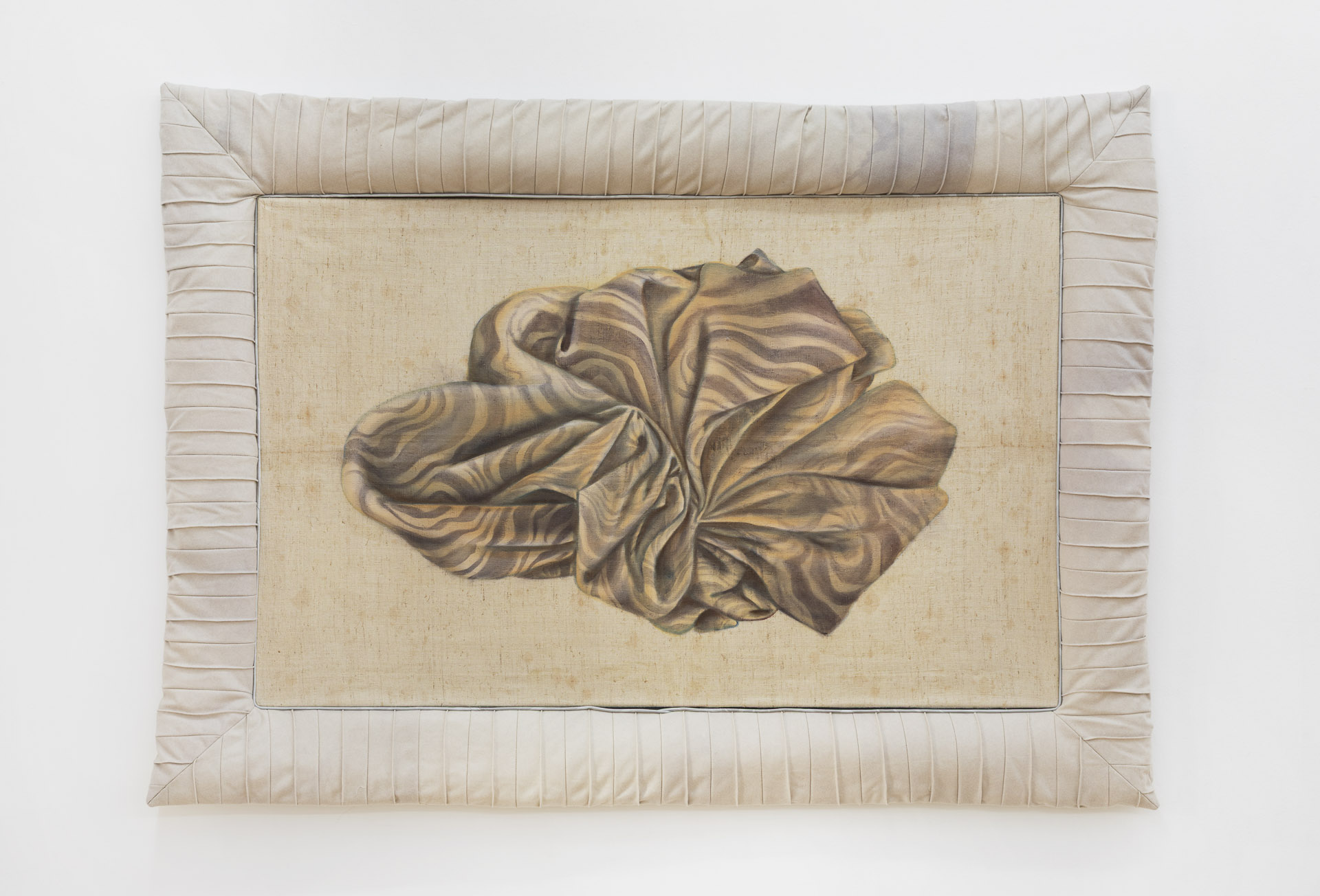
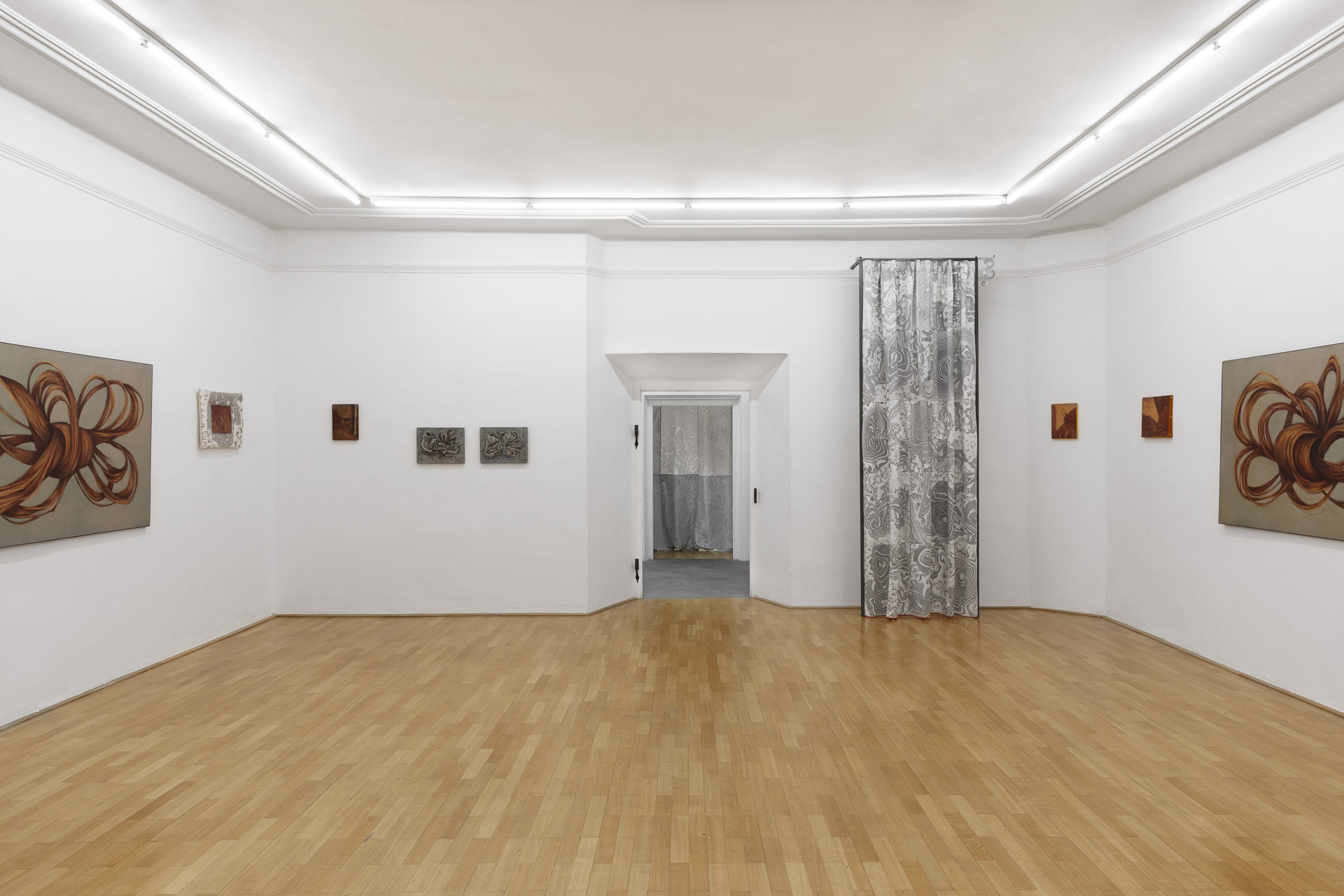
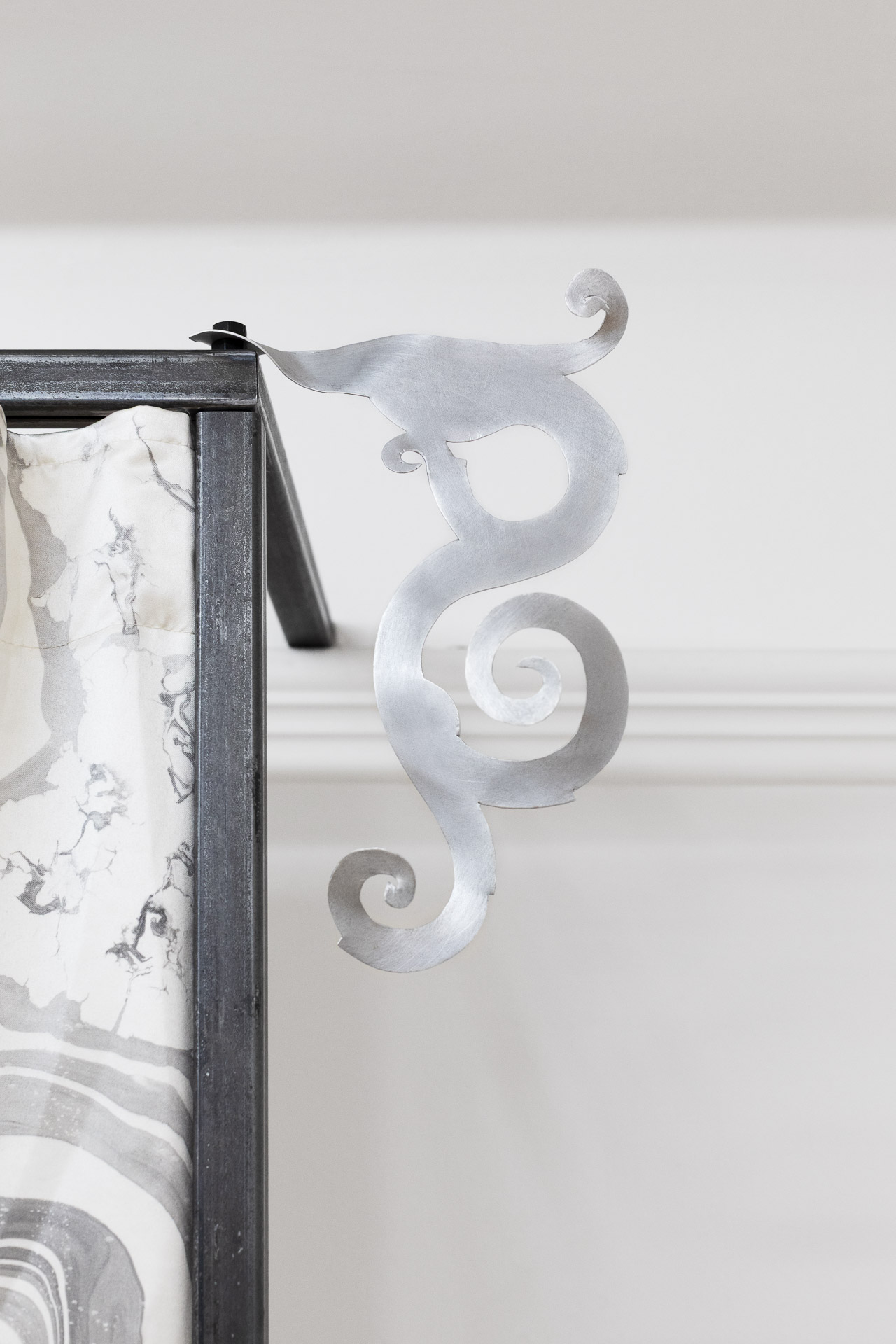
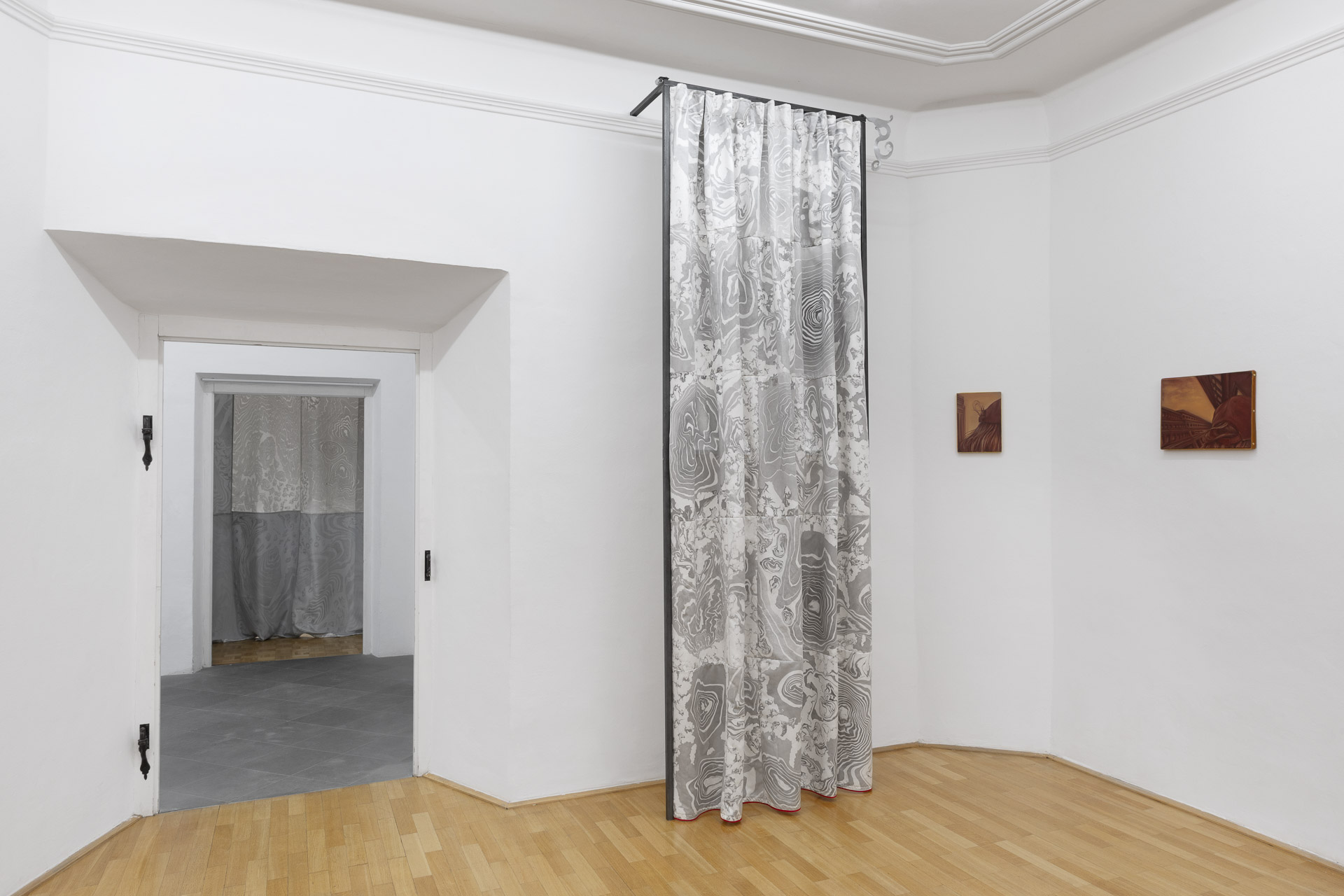
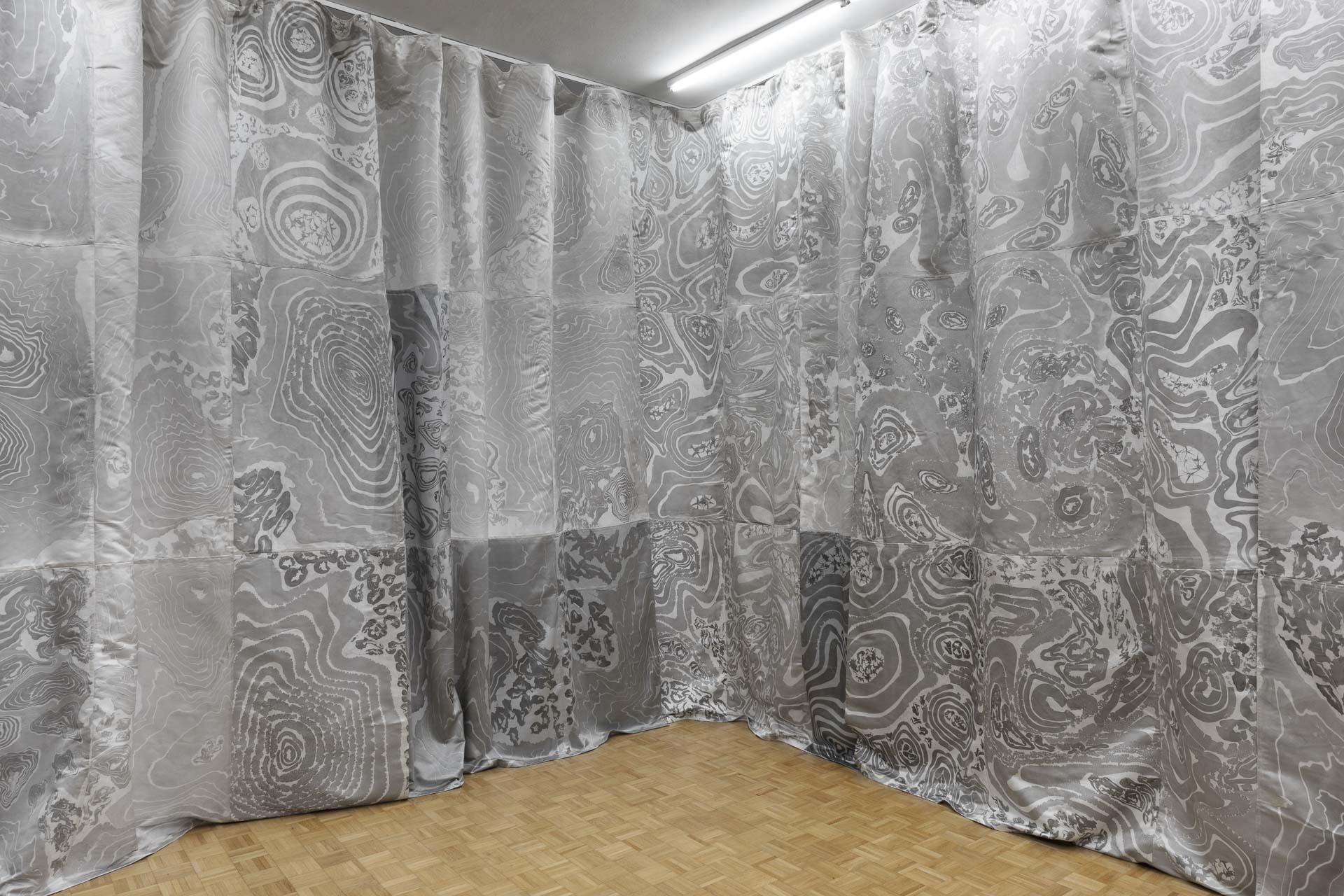
It should lie heavily on the floor, but not so heavily that the billowing fabric accumulates dustballs. Draped carefully, it should look impressive – the curtain. Not too grandiose, but rather delicate to allow the marbling to come into its own. A bit showy, but not too rebellious. The sunlight knows how to set the scene perfectly, streaming in through the windows. The mise en scène could hardly be more fitting. The curtain itself eludes classification and wants to be just simply a curtain now. Neither to conceal nor reveal, unveil nor point out, articulate anything nor demonstrate any distinctive quality. Wouldn’t that be nice? No, it wants to be solid, unspecified, to be a body. Three-dimensional in space, not merely for function, but for form. Vain, dominant, and delicate in equal measure. The stage is so befitting for it. But it wants no part of it.
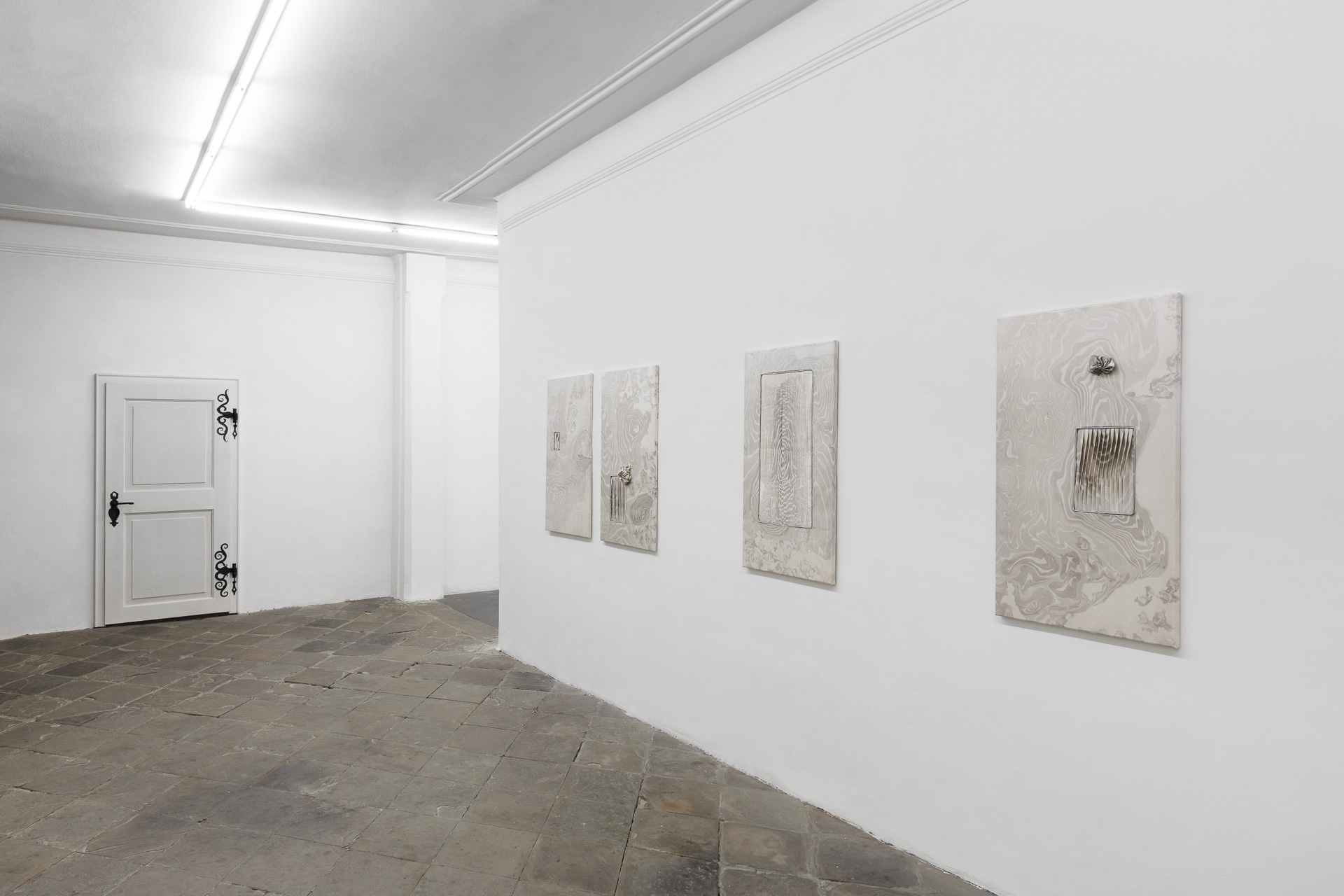
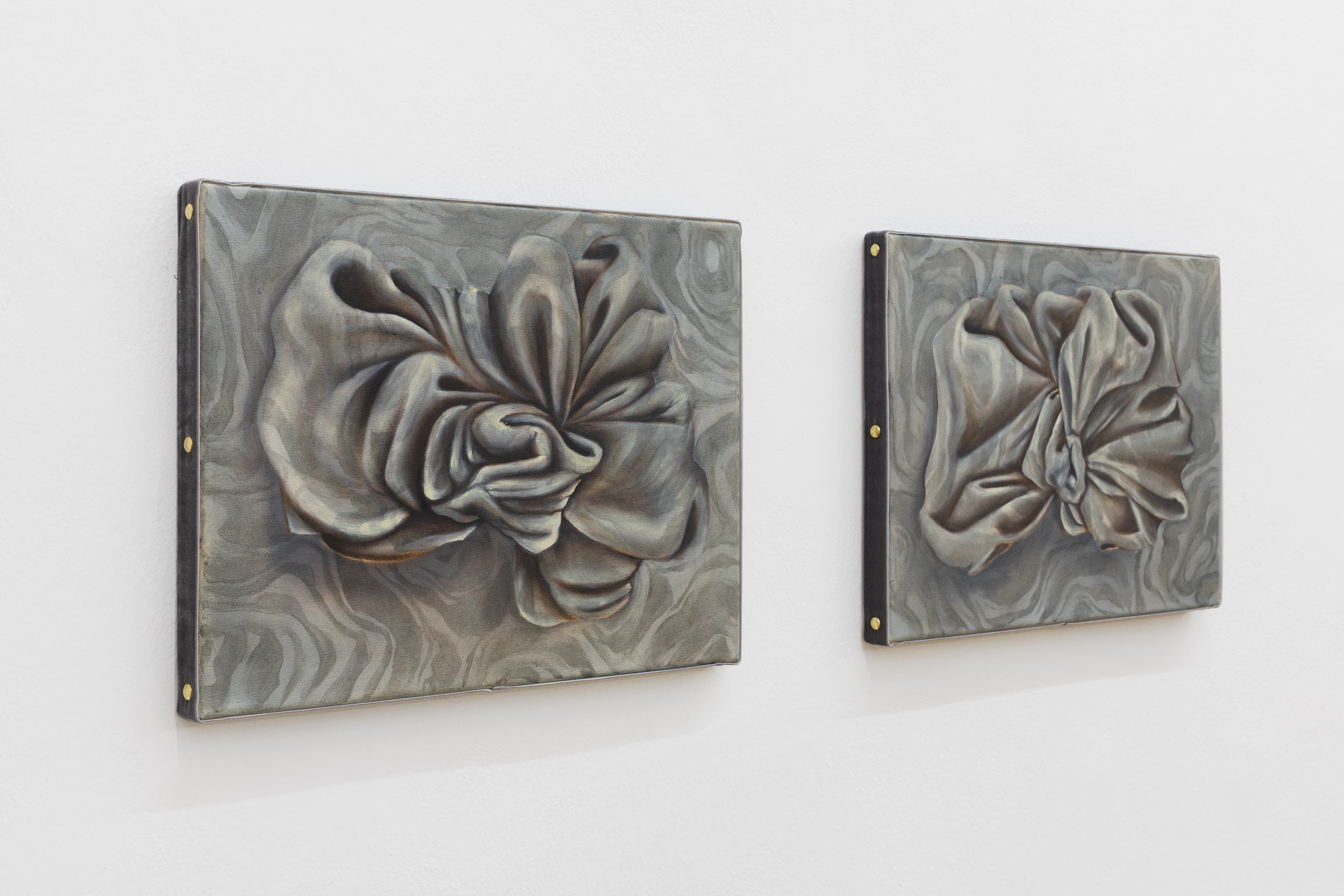
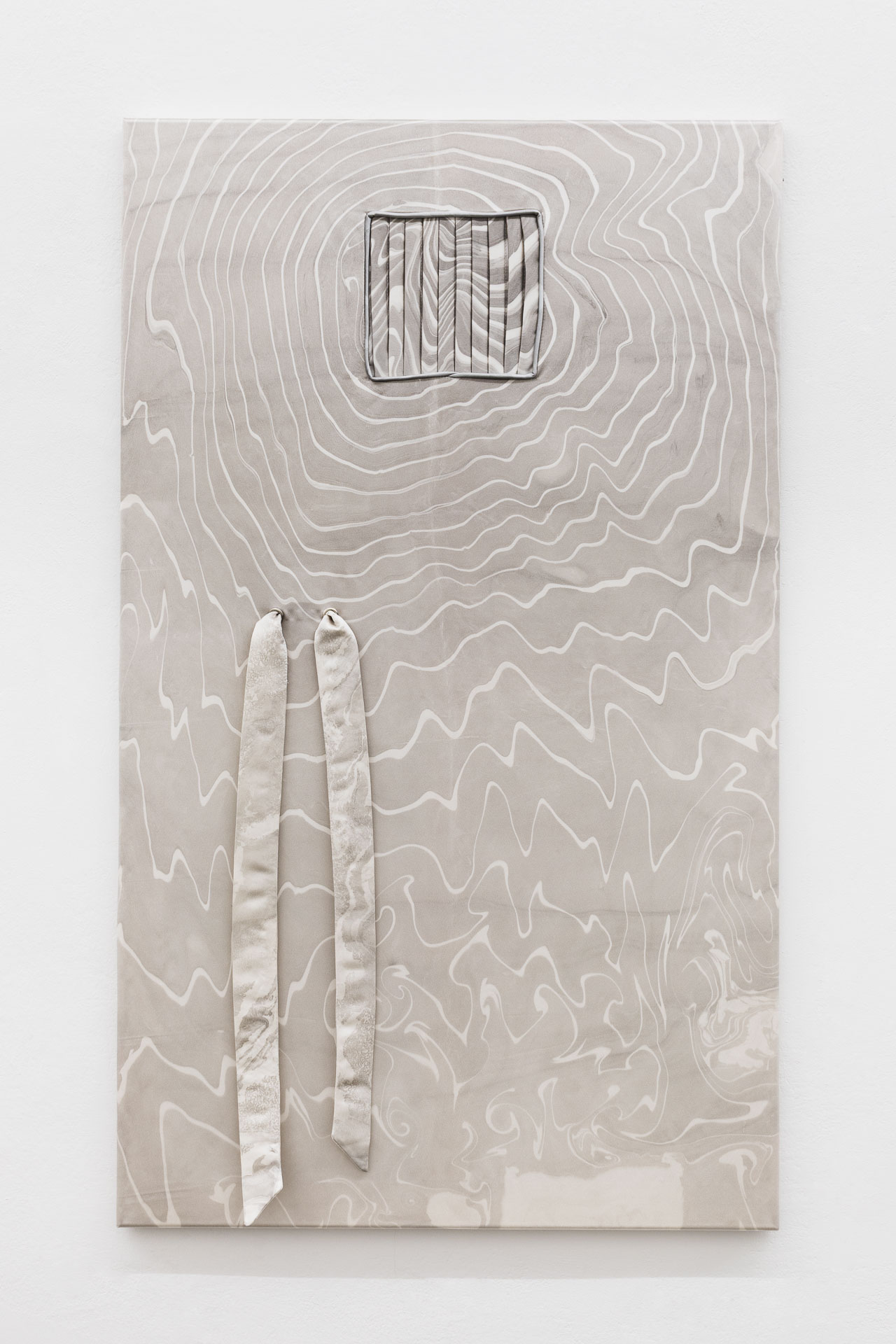
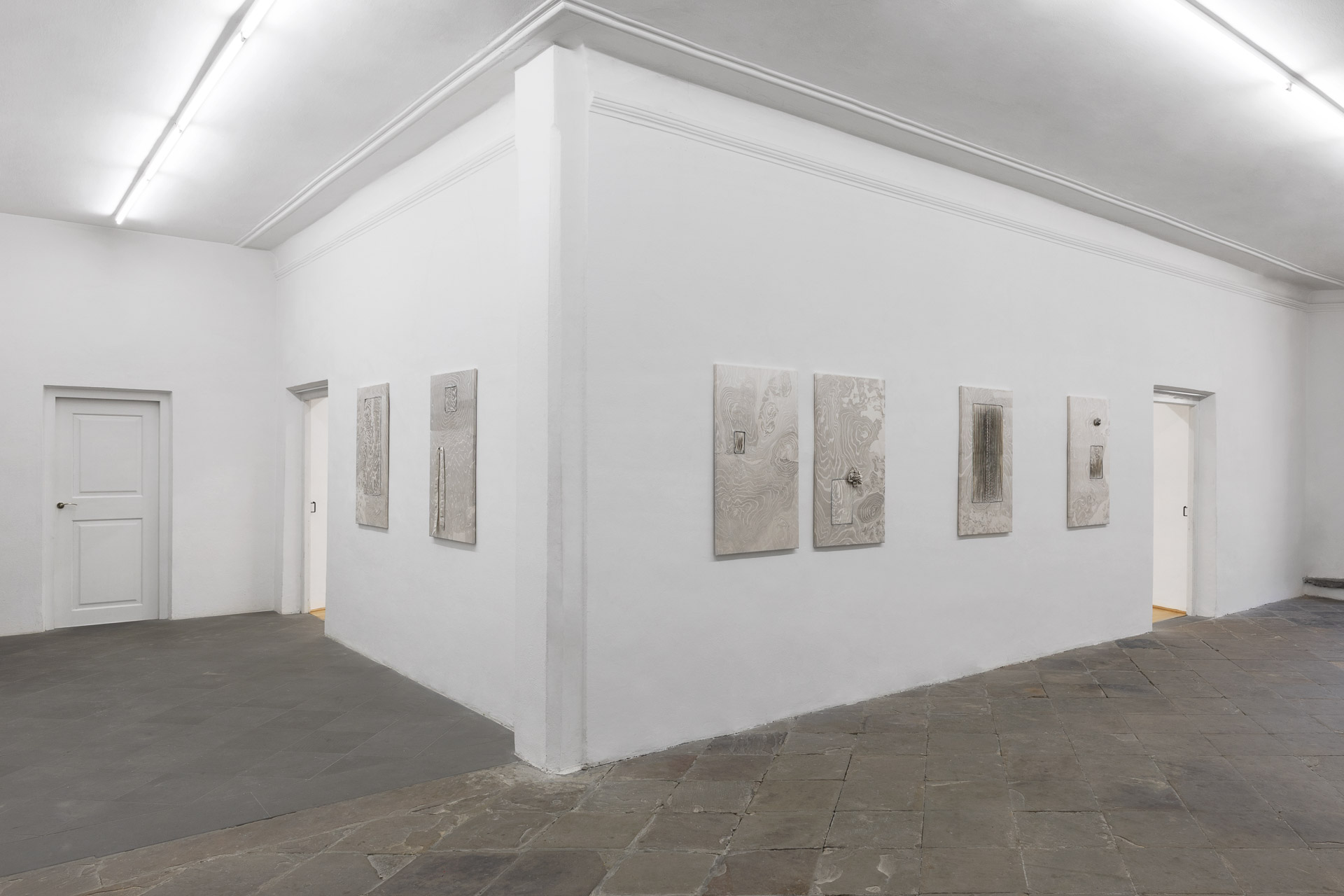
Marbled patterns grace the walls above the 500-year-old stone floor with restrained elegance. No clear structures are discernible in the teeming, meandering painted patterns in soft grey tones. They comprise the overture to this opera in three acts. The only elements in the design suggesting order are little strips of piping or pin tucking sewn neatly into the fabric. Knots in floral-like form as part of the decor. They anticipate the invitation of the curtain. Their purpose is to instill calm yet they exquisitely highlight the marbled chaos.
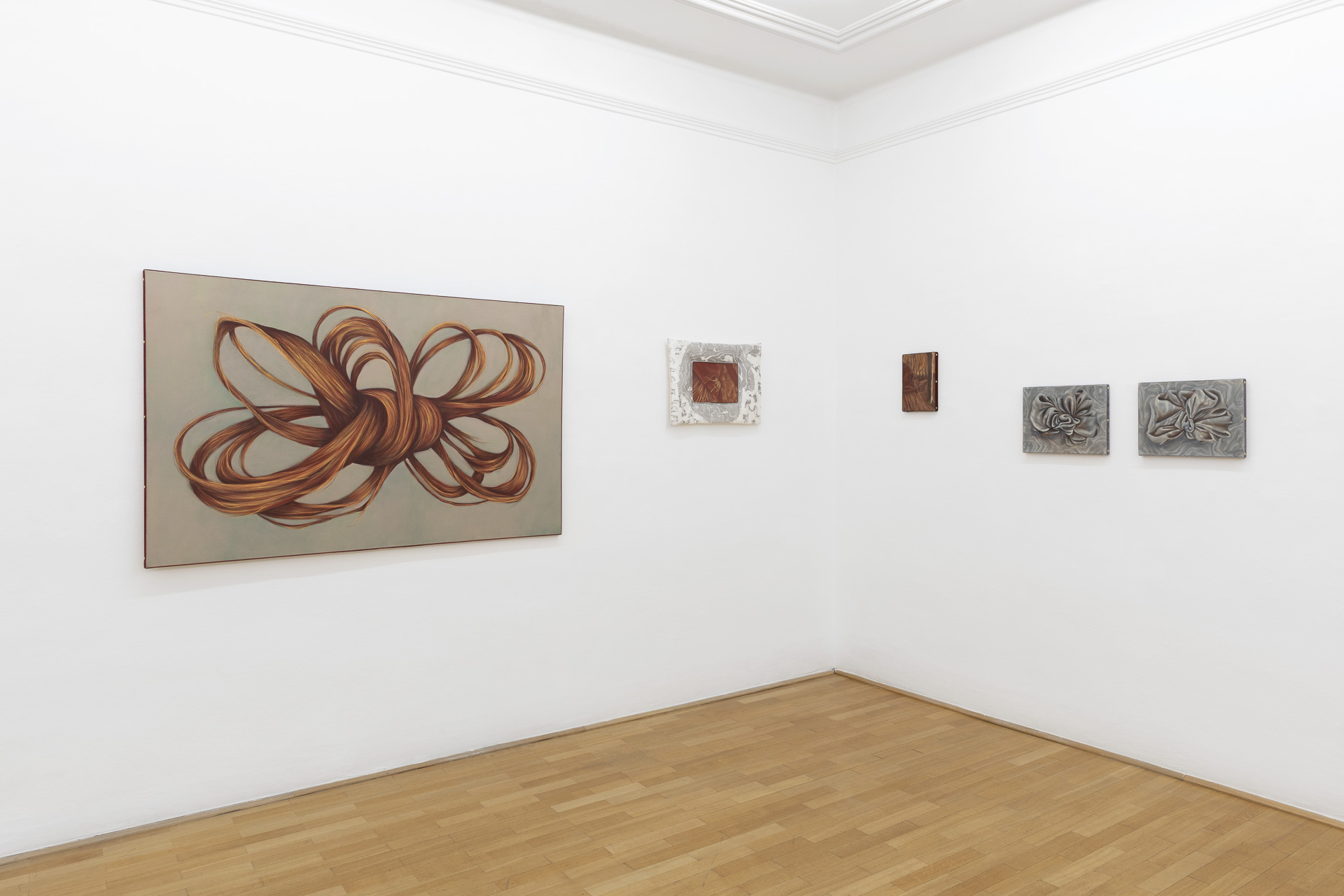
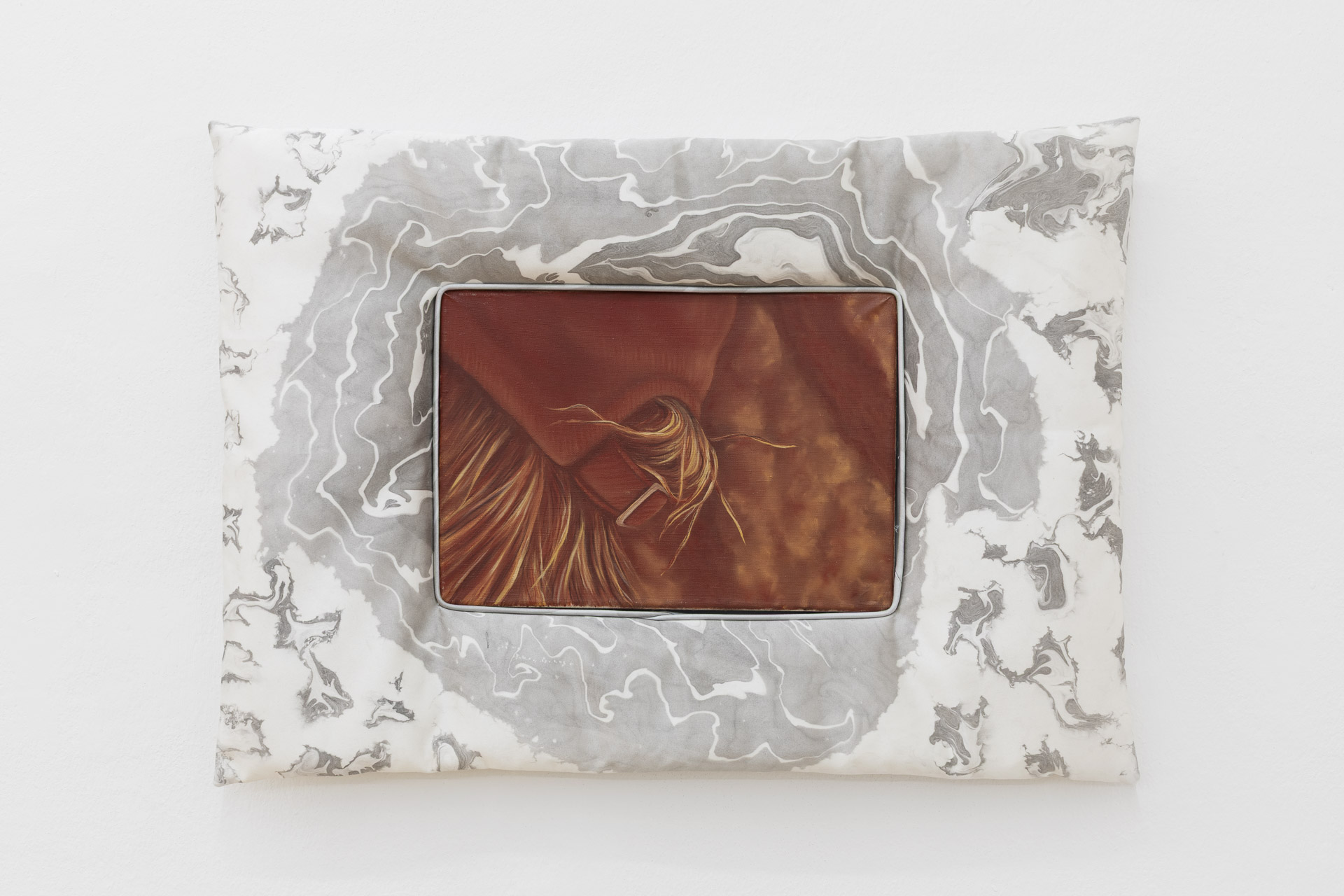
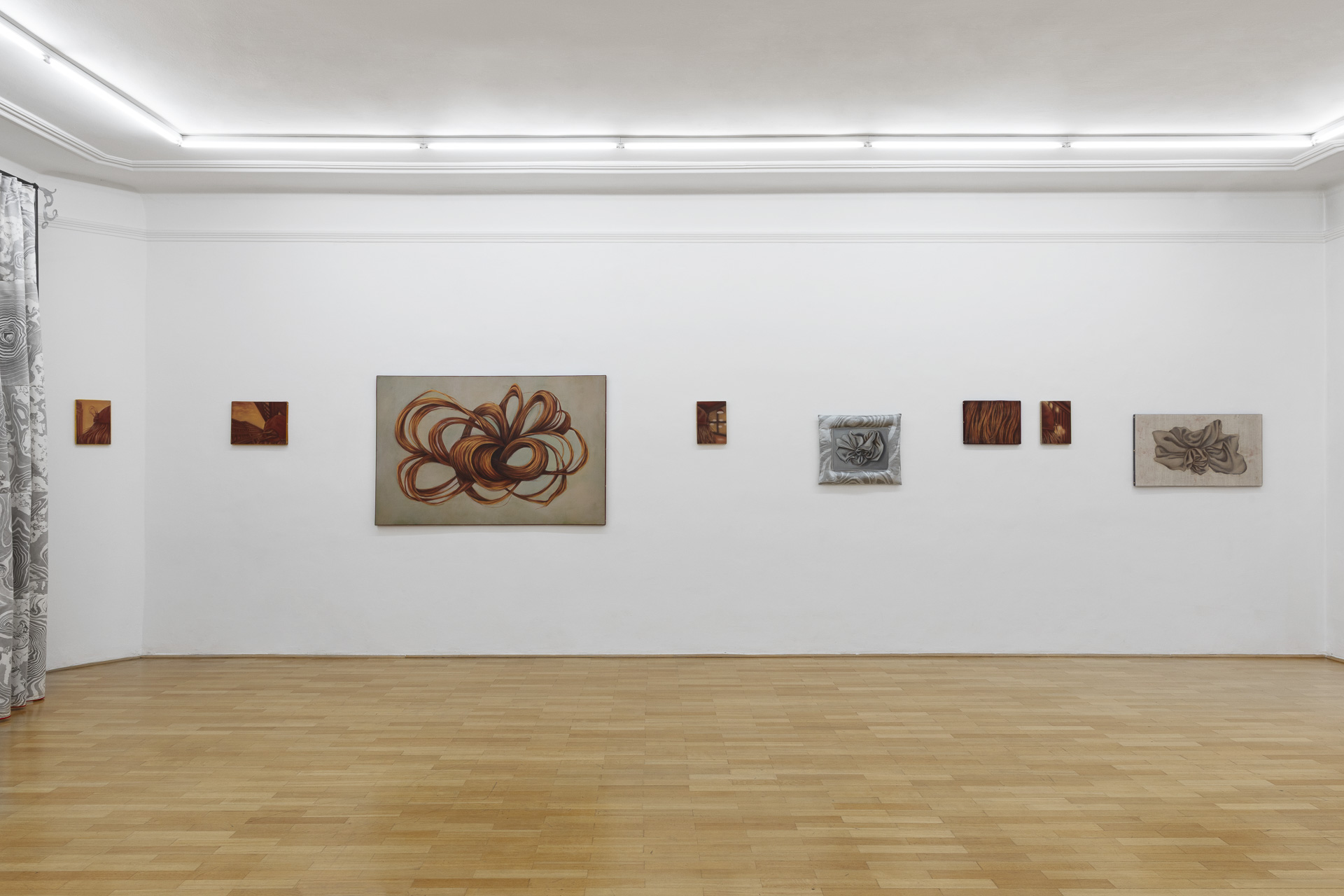
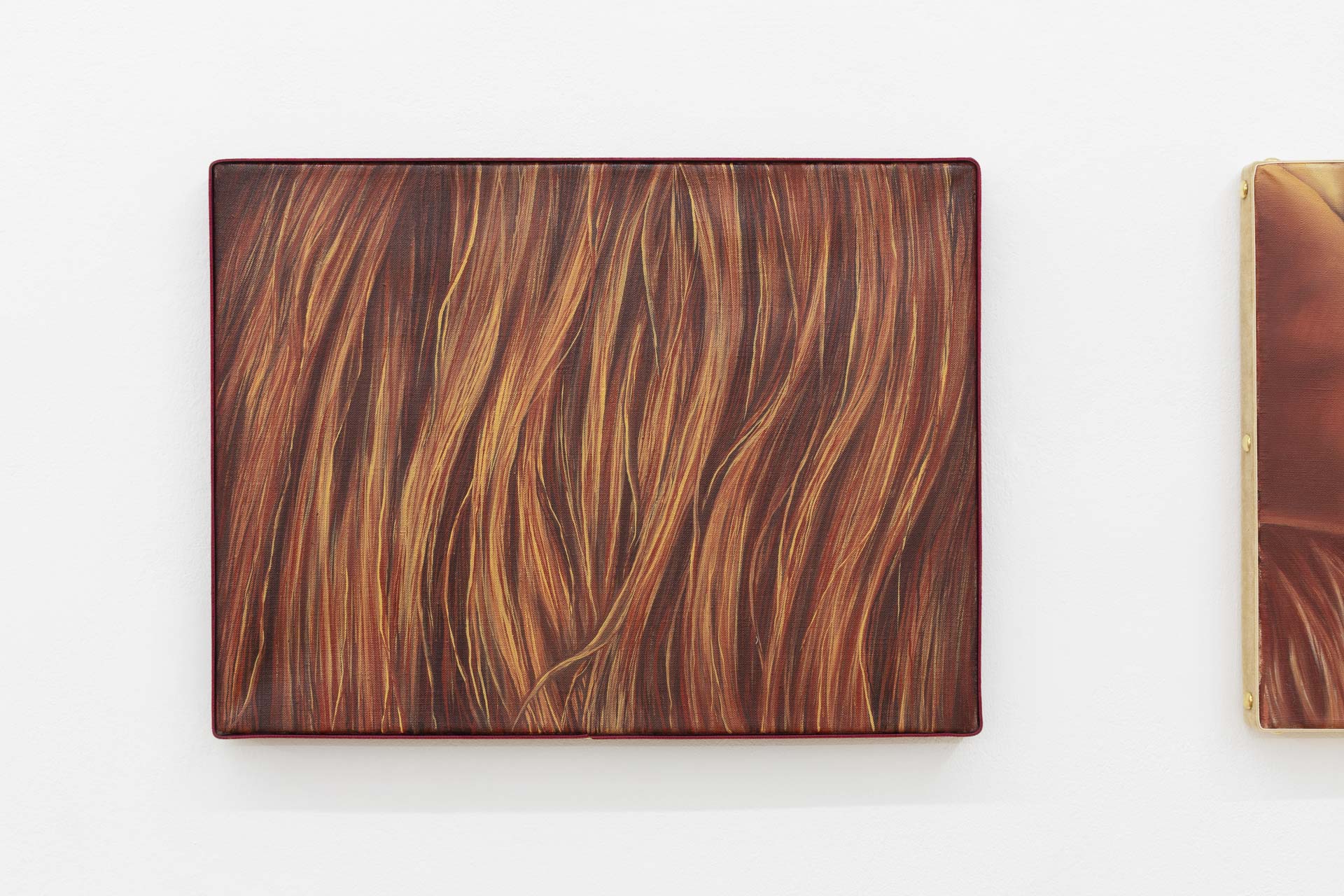
A heavy gasp emerges from offstage: „Ah! Tutto, tutto fini, or tutto, tutto fini.“[1] But the curtain cannot quite shake off the tragedy and promptly resumes its original pose. The others take it more lightly, particularly the knots who playfully dot the paintings. They seem dreamy, reminiscent of hair ties in assorted hues and patterns. While small and playful at first, a few corners further on they rise into independent formations, their majestic grandeur evoking something primordial. The marbling serves as their costume and lends the knots a lifelike air. The theatrical drapery of the interwoven body culminates in an entanglement of fabric, i.e., the knot itself.
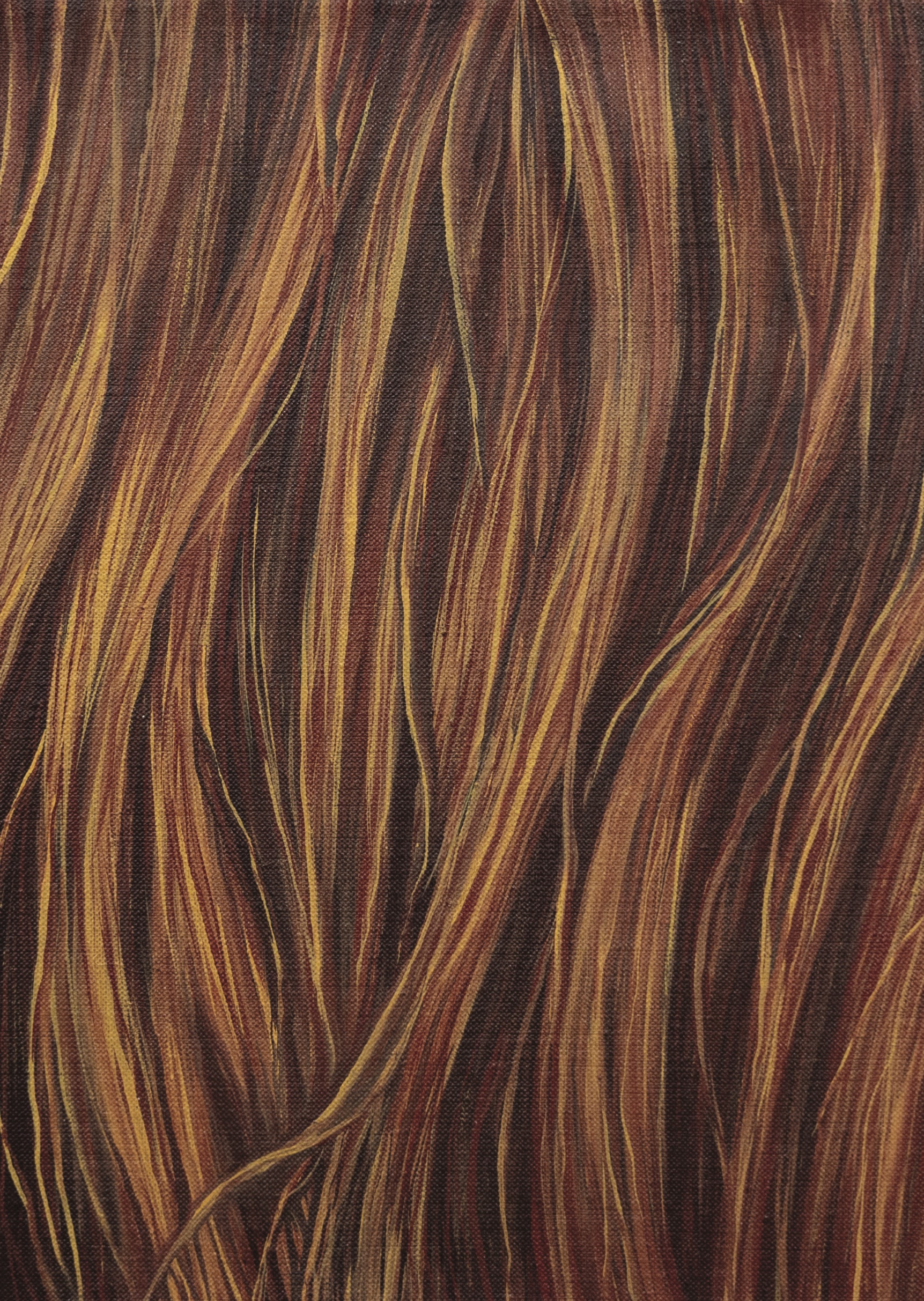
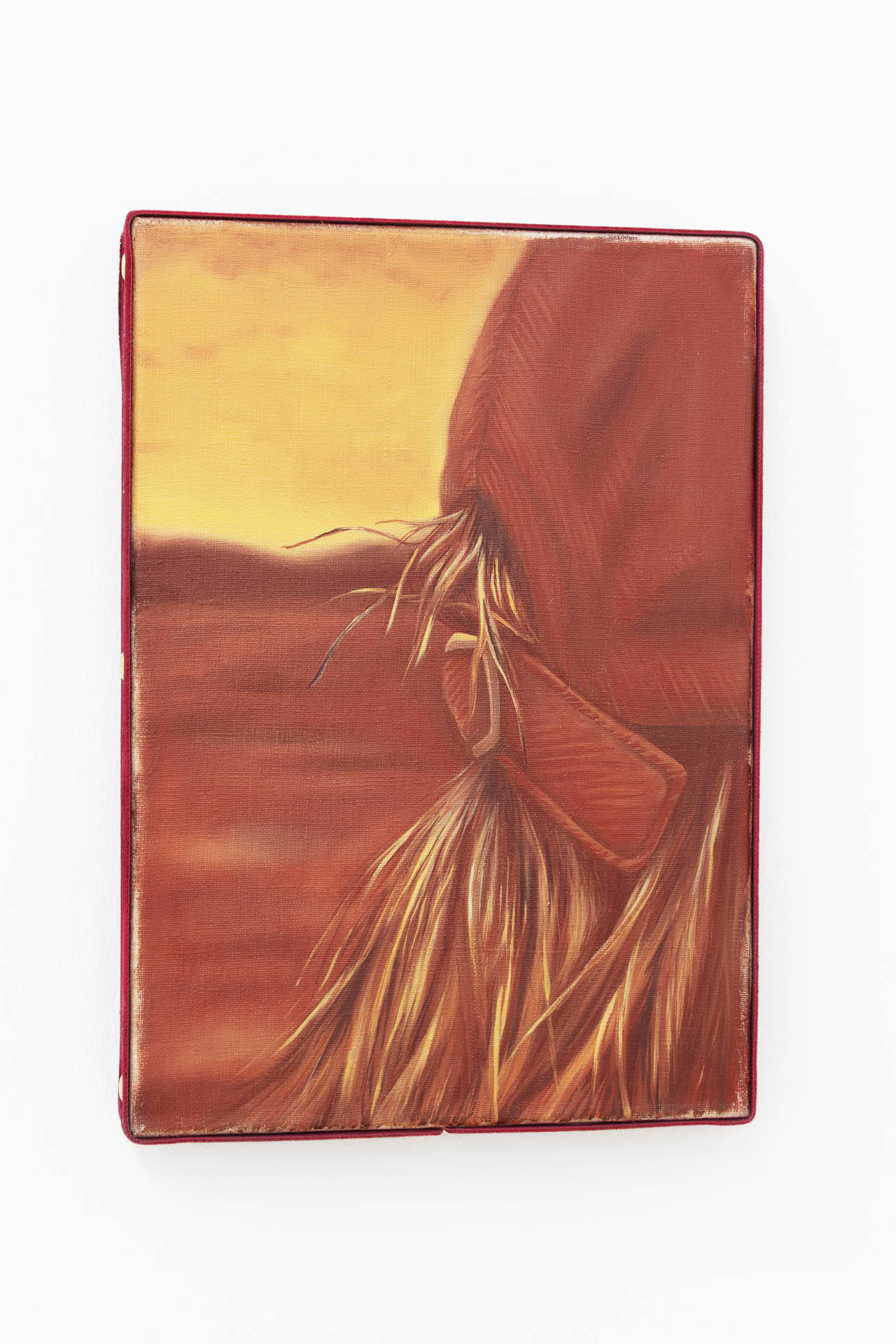
The choir takes the stage. The implicit, dramatic promise makes the hair on the back of our neck stand on end. Expectations are at their peak. Whispers and murmurs begin: “Teneste la promessa, teneste la promessa.” The little hairs bend and twist through the baseball cap eyelets. The finest, most delicate. Their entrance resounds in soprano. Then again from the backrooms booms a sombre: “Ah! Tutto, tutto fini, or tutto, tutto fini.” The head with disheveled, knotted hair appears to be in a hurry. In orange-red light, it exits the frame again and again. The knots assume the lead, presenting themselves between architectural facades, columns, and blurry, occasionally gloomy landscapes until they disengage from their familiar surroundings and - like in the perpetual wheel of time - intertwine with one another. “Addio del passato”[2] emerges from their movement. “Addio.”
- Nadja Ayoub
Translation: Signe Rose
[1] Verdi,La Traviata, Atto III, Scena 1
[2] Verdi,La Traviata, Atto III, Scena 2
Image © Lena Sieder-Semllitsch
Anhören